

Introduction: Navigating the Digital Age
As a pediatrician in Beverly Hills, I understand concerns about screen time. Moreover, this topic frequently arises during office visits. We live in a world saturated with digital devices. Smartphones, tablets, laptops, and televisions are everywhere. Consequently, parents face a unique challenge today.
How much screen time is too much? Furthermore, how does digital media impact your child’s brain? These questions deserve clear answers.
Technology evolves rapidly. As a result, research often struggles to keep pace with the rapid advancements in technology. Nevertheless, we have solid, data-driven recommendations available. Therefore, I’m committed to helping you make informed choices.
I’m sharing this post as a guide for you. Additionally, it translates scientific findings into practical advice. I encourage you to use these insights wisely. Ultimately, you can create a balanced environment at home.
The Developing Brain: A Scientific Perspective
The early years are critical for brain development. Specifically, birth to age five represents astonishing growth. During this period, synaptic connections form rapidly. These pathways allow brain cells to communicate effectively.
Providing the right stimuli is crucial. Therefore, understanding brain development helps explain our guidelines.
Scientific Fact: Pruning and Myelination
Experiences significantly shape the brain’s architecture. This occurs through a process known as synaptic pruning. Furthermore, the brain works like a gardener pruning trees. It removes unused connections while strengthening frequently used ones.
Active, real-world experiences build robust pathways. For example, playing with blocks develops motor skills. Similarly, engaging in conversation strengthens language abilities. Meanwhile, running outside builds physical coordination.
Excessive passive screen time creates problems. Particularly in infancy, it diverts attention away. Consequently, this impacts foundational activities and brain connections. By limiting passive viewing, we help the brain focus more effectively. Therefore, children receive the most enriching learning experiences.
Evidence-Based Screen Time Recommendations by Age
Healthy screen time varies by age. Additionally, the developmental stage matters significantly. The following guidelines are based on recommendations from major pediatric organizations. Moreover, current research supports these recommendations.
Zero to 18 Months: The “Zero Screen Time” Rule
The recommendation for infants is clear. Avoid screen media entirely under 18 months. However, video-chatting is an exception. For instance, talking to grandparents is acceptable.
Why is this important? This period focuses on sensory exploration. Infants learn best through three-dimensional interaction. Furthermore, they need engagement with caregivers and objects.
Passive viewing provides no educational benefit. Moreover, it displaces critical face-to-face interaction. Language acquisition requires back-and-forth communication. Therefore, infants develop social skills through honest conversations.
18 to 24 Months: Introduction to Quality Content
At this stage, you can just introduce programming carefully. However, always co-view with your child. This means sitting together and engaging actively.
Co-viewing is absolutely key. You’ll need to talk about what they’re seeing. For example, ask questions and repeat words back to them. Additionally, connect on-screen content to reality. Say things like, “Look, the character is building a tower!” Then add, “That’s just like your blocks!”
This interaction transforms passive viewing. Consequently, it becomes an educational experience.
Two to Five Years: Setting the Limit
Preschoolers need strict limits on screen use. Specifically, limit usage to one hour daily. Moreover, choose only high-quality programming.
This limit protects time for unstructured play. Therefore, prioritize interactive, educational content carefully. Look for programs with slow pacing. Additionally, they should have clear educational goals.
Ensure ample time for essential activities. These include physical play, sleep, and reading. Furthermore, social interaction is crucial. A good rule of thumb helps here. For every screen hour, provide several hours of movement. Additionally, encourage creative play throughout the day.
Six Years and Older: Consistency and Individualization
Once children start school, focus shifts slightly. Instead of strict time limits, establish consistent boundaries. Furthermore, ensure the media doesn’t interfere with priorities.
There’s no single “magic number” here. However, most experts recommend specific limits. Aim for no more than 1.5 to 2 hours daily. This applies to non-homework-related screen time.
Prioritize activities first. Homework must come before screens. Similarly, physical activity is essential. Additionally, family time cannot be compromised. Sufficient sleep remains vital as well. Specifically, 6-12-year-olds require 9-12 hours of sleep nightly.
Establish “screen-free zones” consistently. The bedroom is critical. Likewise, the dinner table holds significant importance. Removing screens from bedrooms protects sleep hygiene. In fact, I consider this vital for pediatric health.
Key Data Points Influencing Guidelines
These recommendations aren’t arbitrary. Instead, they result from extensive research. Specifically, studies link screen habits to developmental outcomes. Sleep and language are critical areas.
Sleep Interference
A 2018 Pediatrics study found significant correlations. Late-evening screen time disrupted sleep patterns notably. Children aged 8-17 who used screens before bed suffered consequences.
Specifically, they were 3.5 times more likely to experience inadequate sleep. Inadequate sleep refers to less than 8 hours of sleep nightly. Adequate sleep is vital for many reasons. It supports memory consolidation and emotional regulation. Furthermore, it promotes overall growth.
Therefore, banning bedroom screens after bedtime is non-negotiable. I recommend this to all my families.
Language Development
Research consistently highlights the risks associated with young children. Excessive screen time causes developmental concerns. A study involving 89 children revealed essential findings.
For every 30-minute increase in handheld screen time, the risk increased. Specifically, there was a 49% increased risk. This affected expressive language delay in 18-month-olds.
This underscores a critical need. Real-world, spoken interaction with caregivers is essential. Furthermore, it’s vital during language acquisition phases. No app can replace a parent’s voice.
Establishing a Healthy Digital Diet: The Family Media Plan
My goal isn’t to ban technology entirely. Instead, I aim to foster digital literacy. Also, I would like to encourage responsible usage.
The most effective approach is creating a Family Media Plan. This plan is a proactive agreement. Moreover, it empowers you and your child significantly.
Create this plan as a living document. If your child is old enough, involve them in the process. Additionally, outline clear expectations for all family members. Remember, parents must follow rules too.
The Four Pillars of a Media Plan:
1. Usage Boundaries: Clearly state daily time limits. Additionally, define “screen-free zones” precisely. For example, “No screens at the table.” Similarly, “No screens in bedrooms after 8 PM.” Be consistent with these rules.
2. Content Quality: Discuss what constitutes “high-quality” content together. Encourage programs that inspire creativity and learning. Additionally, support content promoting physical movement. However, actively discourage violent content. Similarly, avoid excessively passive or age-inappropriate material.
3. Digital Citizenship: Teach children about online responsibility. Specifically, discuss concerns related to privacy and cyberbullying. Furthermore, explain the permanence of digital footprints. Remind them that real people exist behind screens. Additionally, those people have real feelings.
4. Balance: Explicitly schedule non-screen activities daily. Include family dinners and outdoor play. Moreover, prioritize reading books and creative hobbies. Remember, screens are rewards, not defaults.
Creating Balance and Modeling Behavior
Your own behavior matters most significantly. Children learn primarily by observing you. If they see you checking your phone constantly, they notice. During playtime or meals, this sends messages. Consequently, they internalize that behavior as usual.
I often tell parents this: lead by example.
Be Mindful of Presence: When your child speaks to you, respond appropriately. Put your phone down immediately. Additionally, give them your undivided attention. This models respect effectively. Furthermore, it significantly strengthens your connection. This is fundamental to their emotional security. Moreover, it helps them form strong bonds.
Prioritize Creative Play: Encourage activities that promote executive function. These skills are essential for lifelong success. They help children plan and focus attention. Additionally, they support remembering instructions and juggling tasks.
Include activities like building with LEGOs. Similarly, try playing board games together. Furthermore, encourage drawing and imaginative role-play. These activities build cognitive frameworks effectively. Therefore, they support lifelong success.
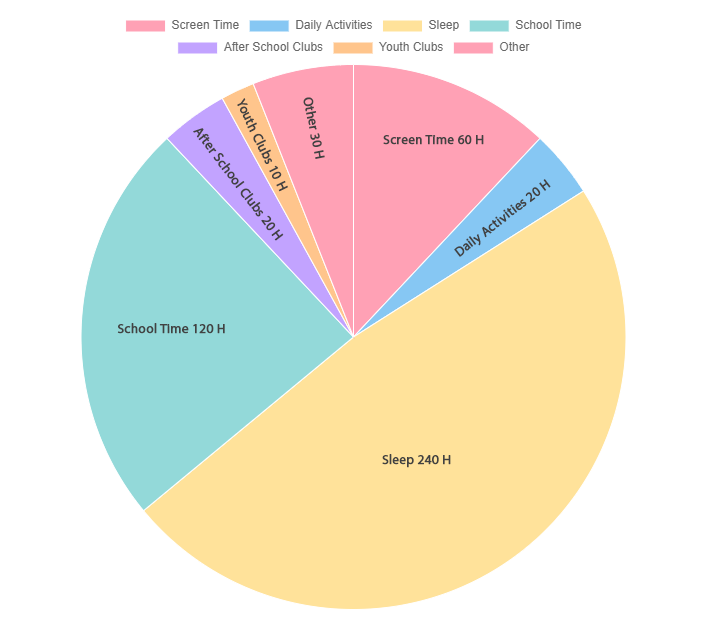
Visual Guide: Time Allocation for Children Ages 6-12
I often share a simple chart with patients. This helps illustrate the needed balance clearly. It highlights the importance of prioritizing time daily. Moreover, it places screen time as a minor component. A busy, healthy day includes many activities.
Conclusion and Next Steps
Managing screen time is an ongoing conversation. It’s not a one-time decision. Furthermore, it requires flexibility and consistency. Additionally, open dialogue is essential throughout the process.
Approach this challenge with evidence-based guidelines. Use a Family Media Plan consistently. Moreover, commit to modeling responsible behavior yourself. By doing this, you set your child up for success. They’ll thrive in the digital world.
We must not view technology as inherently bad. Instead, you can see it as a powerful tool. However, it requires thoughtful and intentional use. Therefore, prevent it from displacing life’s essential building blocks.
I encourage you to visit my website. Find more resources on child development there. Additionally, discover parenting tips and healthy habits. Visit BeverlyHillsPediatrician.com for support.
For further reading, consult these high-authority sources:
The American Academy of Pediatrics (AAP) Media and Children Communication Toolkit: https://www.aap.org/en/patient-care/media-and-children/
The World Health Organization (WHO) Guidelines on physical activity, sedentary behavior and sleep for children under 5 years of age: https://www.who.int/news-room/detail/24-04-2019-to-grow-up-healthy-children-need-to-sit-less-and-play-more
Disclaimer: This blog post provides general information and is not a substitute for professional medical advice, diagnosis, or treatment. Always seek the advice of your pediatrician or other qualified health provider with any questions you may have regarding a medical condition or health objectives.
