

I want to welcome you to my practice personally. As a dedicated pediatrician serving the Beverly Hills community, I understand that you have high standards for your child’s health and well-being. My primary goal is always to provide you with the most current, professional, and clear guidance available, especially when it comes to the childhood immunization schedule.
Every year, the Centers for Disease Control and Prevention (CDC) and the American Academy of Pediatrics (AAP) update the recommended schedule in response to the latest scientific data, new vaccine developments, and shifting public health needs. These updates reflect science working in real-time to provide your child with the strongest protection possible. While the core vaccines—the ones protecting against classics like polio, measles, and tetanus—remain firmly in place, the 2025 immunization schedule brings some significant and positive clarifications that I want to walk you through.
My team and I are here to help you navigate every change. Please science behind vaccination. Your child’s safety is my number one priority, and understanding these new recommendations ensures we work together to keep them healthy. You can always learn more about my philosophy and practice on my website: BeverlyHillsPediatrician.com.
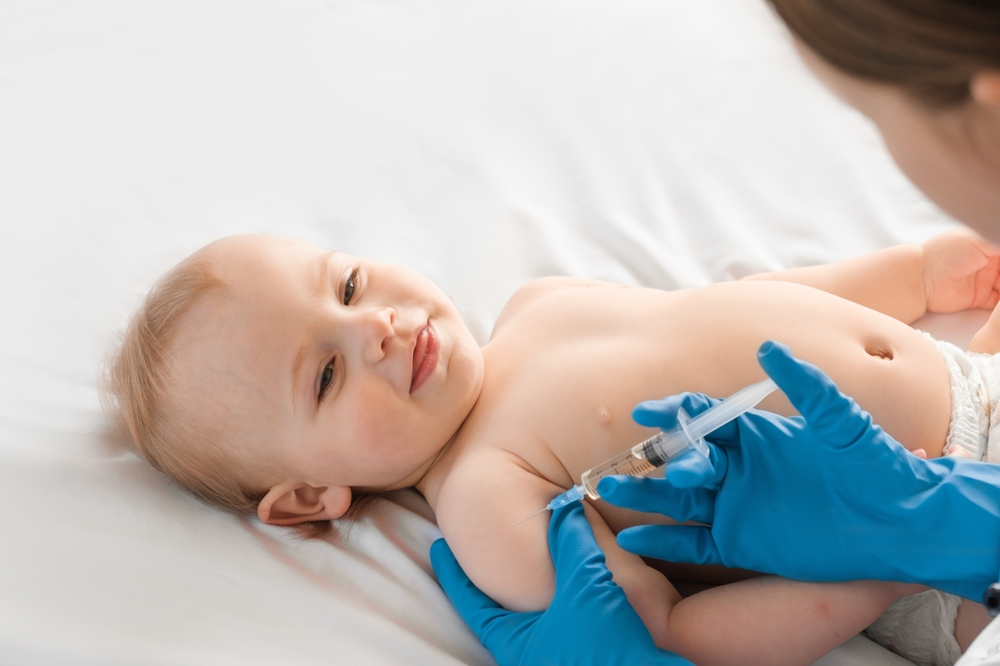
Key Updates in the 2025 Immunization Schedule
The new schedule focuses on optimizing protection against both established and emerging respiratory diseases. We are seeing changes in three main areas: new preventive options for Respiratory Syncytial Virus (RSV), adjustments to COVID-19 vaccine guidance, and a refinement of the Varicella (Chickenpox) and Meningococcal B schedules.
A Major Focus: Protection Against RSV
One of the most significant developments for parents of newborns and infants is the clarification of guidance on protecting babies from Respiratory Syncytial Virus (RSV). RSV is a common respiratory illness, but for infants, it can cause severe illness, leading to bronchiolitis and pneumonia, often requiring hospitalization.
For the 2025 season, the CDC has reinforced the dual-pathway approach to protecting infants:
- Maternal RSV Vaccine (Abrysvo): This vaccine is recommended for pregnant individuals between 32 and 36 weeks of pregnancy during the RSV season (typically September through January). When a mother receives the vaccine, she actively passes protective antibodies to her developing baby before birth.
- Infant RSV Monoclonal Antibody (Nirsevimab, marketed as Beyfortus): This is a single injection—not a vaccine, but a monoclonal antibody—recommended for infants under eight months old who are entering their first RSV season and whose mothers did not receive the maternal vaccine. This injection provides immediate, passive protection for their first season.
My recommendation is to ensure your baby receives one of these protections. An infant who receives the monoclonal antibody is considered protected and does not need the maternal vaccine, and vice versa. It’s an exciting example of how modern science provides us with proactive, life-saving tools to fight common winter viruses.
Clarifying COVID-19 Vaccine Recommendations
The guidance for the COVID-19 vaccine continues to evolve in response to the virus’s mutations. For 2025, the recommendation for children and adolescents is the current circulating viral variants.
The CDC and AAP now emphasize that the recommendation for vaccination is based on shared clinical decision-making for most healthy individuals over a certain age. This means that we, as your medical team, will discuss your child’s specific health factors, including any underlying medical conditions, your family’s exposure risk, and the local community transmission rates, to determine the most beneficial timing for your child’s vaccination.
It remains true that infants and children with chronic medical conditions, such as asthma or diabetes, are at a higher risk for severe outcomes from COVID-19. Protecting these vulnerable children is a priority, and the updated schedule helps streamline that process. The core message is clear: the current vaccine is essential.
Important Adjustments to Established Vaccines
While much of the focus is on the newer respiratory protections, the 2025 schedule includes essential changes to the timing or administration of a few established childhood vaccines, all based on new data aimed at improving both safety and efficacy.
Standalone Varicella (Chickenpox) Vaccination
One notable change for the youngest patients involves the Varicella (Chickenpox) vaccine.Children receive the chickenpox vaccine as a standalone shot, not as part of the combined MMRV vaccine.
This recommendation change stems from data showing a slightly increased risk of febrile seizures—simple, short-lived seizures associated with a fever—occurring roughly 7 to 10 days after the first dose of the MMRV combination vaccine in this specific age group. By separating the Varicella component and giving the MMR and Varicella vaccines as two shots, we significantly reduce this already small risk.
Please note that the risk remains low for both options; however, our goal in pediatric medicine is to minimize all risks whenever possible. This new approach represents a minor logistical change for my office, but a significant safety improvement for your toddler.
Meningococcal B (MenB) Vaccine Simplification
Meningococcal disease is rare but rapidly life-threatening, and the MenB vaccine protects against one of the major strains. For teenagers and young adults, the 2025 schedule provides simplified dosing guidance for the MenB vaccine, specifically for the Bexsero product:
- Healthy individuals ages 16–23 now receive two doses, six months apart, based on shared clinical decision-making.
- High-risk individuals age 10 and older with certain medical conditions—such as a damaged spleen or immune deficiencies—should now receive a three-dose series at 0, 1–2, and 6 months.
This adjustment streamlines the schedule for healthy teens while providing a more robust, tailored series for high-risk patients who need it most. This change is vital for parents preparing their children for college dorms or communal living, where the risk of MenB can be higher.
Data and Scientific Integrity: Why We Trust the Schedule
I know that as a parent, you often encounter conflicting information online. My job is to ground our decisions in rigorous, peer-reviewed scientific fact. The foundation of the immunization schedule is its effectiveness at preventing disease.
Scientific Fact: Herd Immunity
Vaccines work not just by protecting the individual child, but by creating “herd immunity,” or community immunity. This is a scientific fact. When most people are immune—such as over 90% vaccinated against measles—the disease is unlikely to spread, protecting those who can’t be vaccinated, like infants or people with immune-compromising conditions. We see the direct impact of this in public health data.
Disease Reduction
The success of the vaccine schedule is measured in the eradication and reduction of diseases that once devastated childhoods.
Polio Elimination. In the United States, there has not been a case of endemic polio since 1979. This elimination is a direct result of widespread childhood vaccination. The disease, which once paralyzed and killed thousands of children annually, has been virtually wiped out in many parts of the world because of vaccine campaigns.
Measles Cases. Before the measles vaccine was introduced in 1963, almost every child in the U.S. got the measles. There were 3 to 4 million cases and 400 to 500 deaths each year. Following the introduction of the vaccine and high uptake, the U.S. declared measles eliminated in 2000. Although we occasionally see imported cases, maintaining a high MMR vaccination rate is essential to prevent outbreaks.
The data above demonstrates the power of the vaccine schedule. The dramatic drop in reported measles cases after 1963 is a clear example of how vaccination actively drives disease elimination.
Taking Action: Your Role as a Parent
My team and I regularly review the official recommendations published by the CDC and the AAP. We proactively integrate these updates into our systems so that when you bring your child in for their well-visit, we are already prepared to discuss and administer the most current, optimized, and safest schedule.
Finding My Expertise
I understand that in today’s digital world, you search for answers. My practice aims to be your most reliable source for pediatric health guidance in the Beverly Hills area. When you search for terms like “2025 pediatric vaccine schedule,” “Beverly Hills pediatrician,” or “child immunization updates,” I want my professional, evidence-based advice to be the first information you find. The language I use is deliberate: it’s experienced, clear, and designed to match the terms you use when you seek out expert care for your child’s health. I use an active voice because I believe in taking an active role in your child’s health, and I encourage you to do the same.
The Next Steps for You
Do not allow the word “change” to cause worry. Think of these updates as the latest version of an excellent operating system—more secure, more efficient, and better suited for the challenges of today.
- Review Your Child’s Record: When you schedule your next appointment, ask my staff to review your child’s vaccine history against the 2025 immunization schedule.
- Ask Specific Questions: If you are planning a pregnancy, have an infant, or have a college-bound teenager, be sure to ask about the RSV prevention and MenB changes specifically. We will use shared decision-making to personalize the plan.
- Stay Informed: The CDC and AAP are the gold standards for this information. I encourage you to read their official public statements.
You can find the most up-to-date and complete official schedules and recommendations from these trusted authorities:
- CDC’s Official Immunization Schedules: https://www.cdc.gov/vaccines/schedules/index.html
- AAP’s Pediatric Immunization Resources: https://www.aap.org/en/patient-care/immunization
